
Zones of Regulation
Yurran P-9 College has introduced the Zones of Regulation framework to support
students exploring a range of tools such as sensory supports, calming techniques and thinking strategies. These strategies can be used to regulate what zone they are in and are taught when, why and how to use these strategies.
There are three components of self regulation to support success, which includes:
- Sensory Processing: How you make sense of the information perceived by your sensory receptors, and how you organise that information to act upon it in a purposeful way. These include hearing, smelling, seeing, touching and tasting.
- Executive Functioning: The cognitive processes involved in the conscious control of thoughts and actions. The ability to self regulate depends on the effectiveness of numerous mental operations, including attending to two or more activities simultaneously, flexible thinking, organising actions, and impulse control.
- Emotional Regulation: Processes that are responsible for controlling emotional reactionsinorder to meet goals. This includes monitoring, evaluating, and modifying the intensity and timing of emotional responses.
All three of these components depend on one another and must exist in order to successfully self-regulate. When one area is diminished it will affect a person's functioning in a negative way.
As part of the introduction of The Zones of Regulation at Yurran P-9 College, all classrooms have created a ‘Calming Corner’. These areas consist of a calming space somewhere in the classroom, where students can go if they need some time to regulate their emotions. These calming corners may have cushions, bean bags, mindful colouring, weighted toys, sensory/fidget items, and visual aids such as posters that guide students through breathing exercises or help them identify their feelings. Teachers teach students how to use the space, making it a proactive routine rather than a reactive consequence.
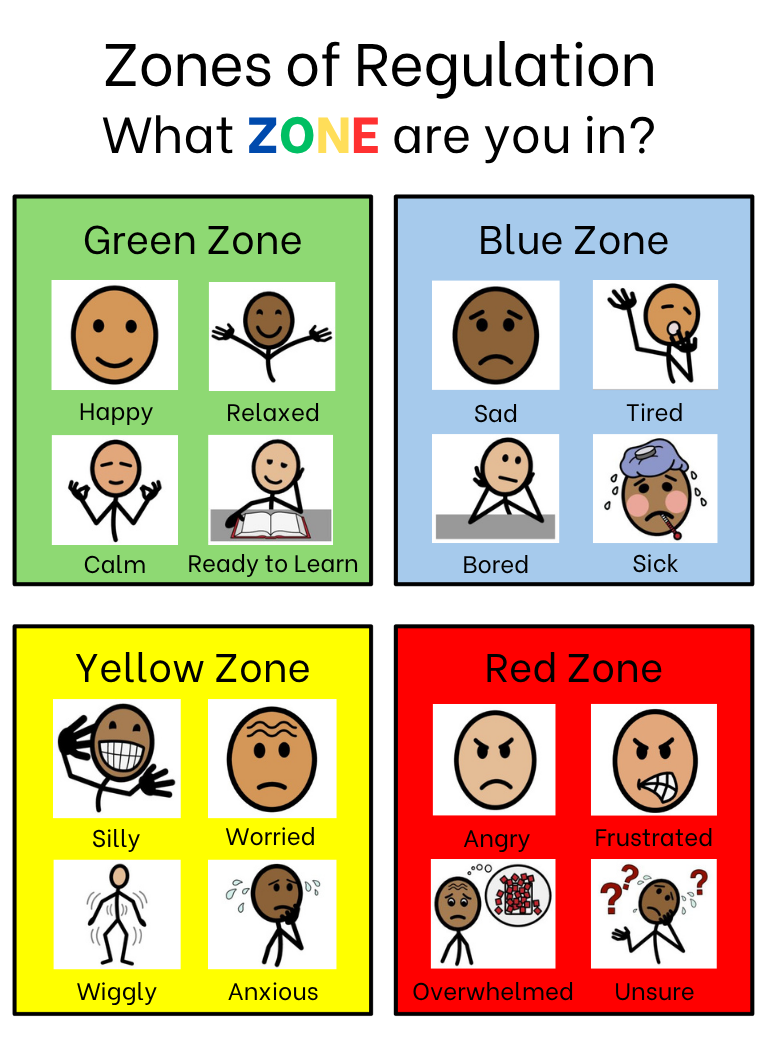
The Zones of Regulation categorises states of alertness and emotions into four coloured zones:
- Green Zone: A regulated, calm state of alertness. A person may be described as happy, focused or content. This is the zone where optimal learning occurs.
- Blue Zone: Low states of alertness, and down feelings, such as when someone is sad, tired, sick or bored.
- Yellow Zone: Heightened state of alertness and elevated emotions, however one has some control. A person may be experiencing stress, nervousness, frustration, excitement.
- Red Zone: Extremely heightened states of alertness and intense emotions. A person may be elated or experiencing anger, rage, explosive behaviour or terror.
The Zones of Regulation explores the body signals associated with each of The Zones, understanding what the learner’s body is communicating about their feelings and internal states, while building the language/communication associated to label and identify feelings. It’s important to note and emphasise that each person will experience body signals within the four Zones in their own unique way, which is why we suggest “possible body signals” associated with each Zone.
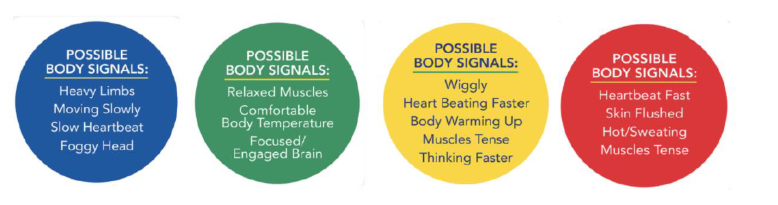
Each person will experience body signals within the four Zones in their own unique way, which is why we suggest possible body signals associated with each Zone. It is important to note that there is no 'bad' zone and we should be using non-judgmental language when describing how we/students are feeling.
All Zones are okay, and all feelings are okay!
Empathy is imperative, as it helps reframe our thinking and approach our students and ourselves in a different lens.
Click here for more information about The Zones of Regulation.
© Yurran P-9 College